 Forward Financing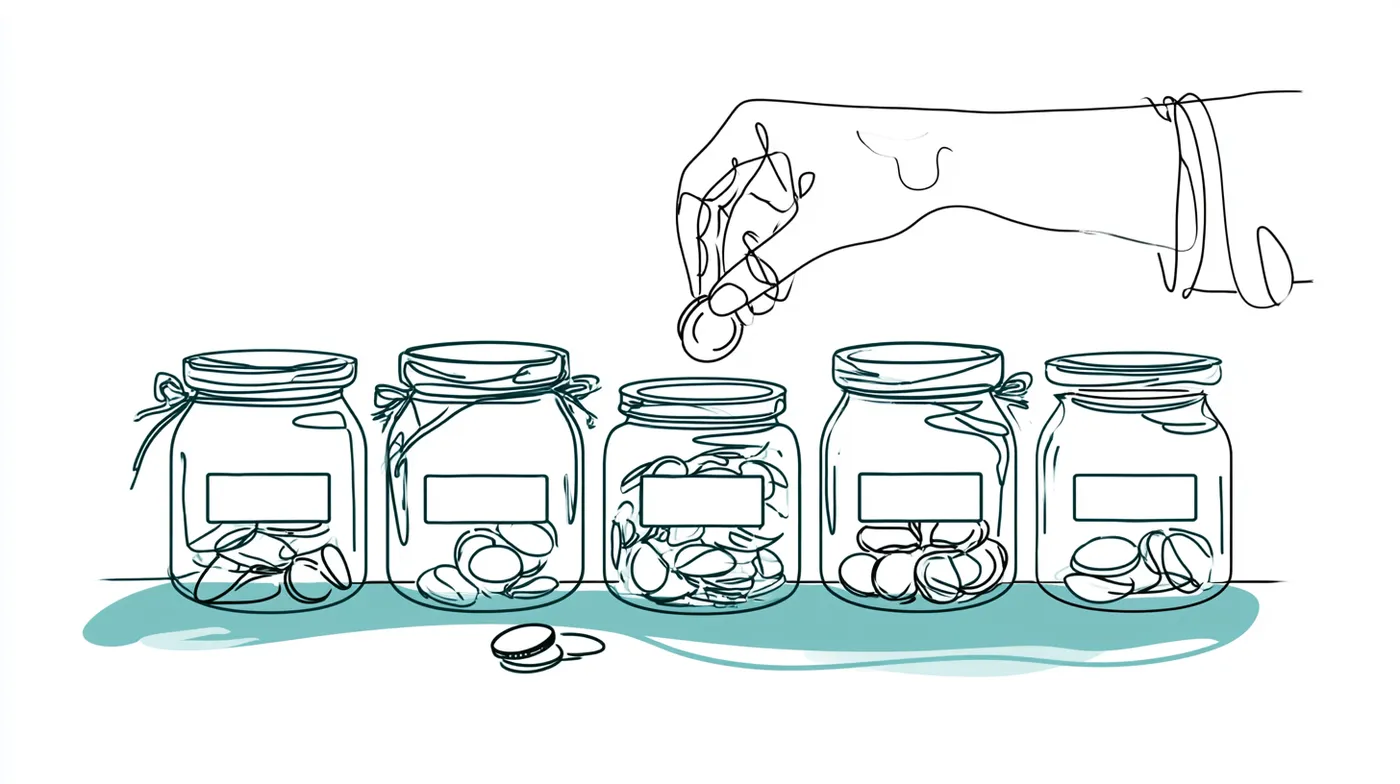
Building a Monthly Budget That Makes Room for a Loan Payment
By Meredith Lawson · Personal Loans · Back to Personal Loans loans
Every month, borrowers accept loan payments their budgets cannot actually hold, and the failure is rarely math skills — it is that nobody ever showed them a budgeting method built for the borrowing decision specifically. General budgets answer "where does my money go?" A borrower's budget answers a sharper question: "what fixed monthly obligation can this household absorb for the next twenty-four months without breaking?" This guide answers the sharp question.
Start with the only income number that matters
Gross salary is a fiction you never touch; take-home is the truth. Pull your last three months of deposits — pay stubs, benefits, side income that actually arrives — and average them. Irregular earners, and every server, stylist, and gig driver knows this pain, should use their lowest month of the last six, not the average; a personal loan payment due in your worst month must survive your worst month. Write the number down. Everything below subtracts from it.

The jar method: eight jars, one evening
Old-timers did this with literal mason jars on pay date, and the physics still work digitally. Label eight jars and fill them from your take-home number in this order:
- Jar 1 — Housing: rent or mortgage, exactly. The number on the lease, not the number you wish were on the lease.
- Jar 2 — Utilities: power, water, gas, phone, internet. Average the last three bills; winter and summer lie in opposite directions.
- Jar 3 — Food: groceries plus the takeout you actually order, not the cooking life you aspire to. Bank statements do not flatter; use them.
- Jar 4 — Transport: fuel, transit passes, parking, and one-twelfth of your annual registration and maintenance reality.
- Jar 5 — Insurance and health: premiums, prescriptions, the copays that recur.
- Jar 6 — Existing debt: every current minimum payment — cards, other loans, anything with a due date. Lenders will count these, so you must first.
- Jar 7 — Living: the modest, honest amount that keeps you human — a streaming service, a haircut, a birthday gift. Zero here is a budget that breaks by March.
- Jar 8 — Cushion: ten percent of take-home, untouched. This jar is why one flat tire will not become one missed loan payment.
Whatever remains outside the jars is your capacity. Not your payment — your capacity. The distinction is the whole game.
From capacity to ceiling: the two-thirds rule
A payment that equals capacity fits only in a month where nothing goes wrong, and no such month exists. Set your ceiling at roughly two-thirds of capacity. If the jars leave $180 free, your ceiling is about $120 — and now the payment calculator becomes genuinely useful, because you can work it backward: at $120 a month, what amounts and terms fit? At 24% APR, roughly $2,250 over 24 months, or about $1,275 over 12. That is your honest borrowing range, discovered before any lender ever weighs in. Lenders run a version of this same arithmetic — the debt-to-income logic explained on the rates page — but their version protects them. The jar version protects you.
The two ledgers: why lenders and households must both say yes
A useful frame before the timing section: every borrowing decision is graded twice, on two different ledgers. The lender’s ledger — income, debt-to-income, banking behavior, per the eligibility page — measures whether the payment can be collected. The jar ledger measures whether it can be lived with, which is a stricter test: collection survives a miserable household; comfort does not. Approval without a jar-cleared ceiling is how technically successful loans produce genuinely unhappy borrowers, and the reviews across the lending industry are full of that exact species of five-star-service, one-star-experience story. Run both ledgers, in this order — jars first, application second — and the only offers you ever read are ones both graders already passed.
Aligning the payment with the money's arrival
The most preventable missed payment in consumer lending is the calendar miss: the money existed, the due date and the deposit date simply disagreed. When you reach a lender's agreement stage, most will let you select or shift the due date — the payment-date terms are right there in the contract, defined in our glossary if the language runs thick. Choose a date shortly after your steadiest deposit lands, enroll in autopay immediately, and Jar 8 stands guard over the rare month when the deposit runs late.
Jar eight in practice: what the cushion caught
The cushion jar sounds theoretical until its first save. In the case files it caught a $210 brake job in month four, a school-fee stack in month nine, and a short paycheck when hours dipped in month fourteen — each absorbed without touching the personal loan payment, each refilled over the following six weeks. That is the jar working as designed: not preventing surprises, but preventing surprises from becoming delinquencies. Households that skipped jar eight met the identical events with late fees instead.
Stress-testing before you sign
Run three rehearsals against your jar budget before accepting any offer. The lean-month test: replay your worst income month of the past year with the new payment inserted — does Jar 8 cover the gap, or does Jar 7 go dark? Uncomfortable is acceptable; impossible is a verdict. The double-surprise test: a car repair and a medical copay land in the same month; the budget survives if Jars 4, 5, and 8 can flex without touching the payment. The duration test: picture month nineteen of twenty-four, the novelty long gone — a payment you can respect that deep into the term is a payment sized correctly. Offers that fail rehearsal fail cheaper now than later; declining costs nothing, as the FAQ spells out.
Three households run the jars: worked examples
Household one: the steady earner. Take-home $3,400, rock-solid biweekly. Jars: housing $1,150, utilities $290, food $520, transport $310, insurance $240, existing debt $180, living $250, cushion $340. Total jarred: $3,280, leaving $120... wait — recount with the honest food number from the bank statements, $460, and capacity is $180. Two-thirds rule: ceiling $120. On the calculator at 24% APR, that supports roughly $2,250 over 24 months — a real number for a real transmission, discovered at a kitchen table instead of a signing screen. This is the household most personal loan marketing pictures, and even here the jars trimmed the fantasy by a third.
Household two: the variable earner. A stylist whose last six months of deposits read $3,300, $2,750, $3,100, $2,600, $3,450, $2,800. The jar method's rule for her is strict: build on $2,600, the worst month, because the personal loan payment will arrive in a month exactly like it. Her jars total $2,440, capacity $160, ceiling about $105 — supporting roughly $1,950 over 24 months at her likely APR. In her best months the payment will feel trivially easy, and that feeling is the trap the worst-month rule exists to disarm; a ceiling set on average months defaults in below-average ones. Variable earners who borrow on worst-month math are the Forward Financing network's quietest success stories — and its rarest, which is why this paragraph exists.
Household three: the tight month. Take-home $2,300; jars — even trimmed honestly — total $2,270. Capacity: $30. Ceiling: $20. No responsible personal loan lives at a $20 payment, and the jar method's gift here is saying so before a lender's approval says otherwise, because approval measures capacity to be collected from, not comfort to live with. Household three's real project is jar six: $210 of existing minimums that a consolidation might compress, or a hardship conversation might reschedule, and the borrowing question deserves re-asking only on the far side of that work.
Maintaining the budget through the loan's life
The jar evening produces a snapshot, and life is a moving picture. Rent renews upward; a car ages into a higher maintenance jar; a raise arrives, or hours get cut. The maintenance discipline is light but non-negotiable: fifteen minutes each quarter re-filling the jars from fresh statements, plus an immediate re-run after any structural change — new job, new home, new family member, new debt. Two outcomes matter. If capacity grew, the surplus has a standing assignment: extra principal against the loan, where the no-penalty prepayment most Forward Financing network lenders offer converts it straight into months deleted from the term, per the arithmetic in our interest guide. If capacity shrank toward the payment, that is the early-warning system firing exactly as designed — and the correct response is a call to the lender before a due date arrives short, because hardship options offered to proactive borrowers beat late fees charged to silent ones in every scenario ever recorded.
The jar method meets the forward loan request
When the jars clear a ceiling and the need is real, the method's final service is filling out the form for you, almost literally. The amount: the expense's written number, capped by what your ceiling supports on the calculator — never the round number anxiety suggests. The term: the shortest calendar whose payment fits under the ceiling with the two-thirds slack intact. The timing: a business-day morning with documents ready, per the application guide. And the offer, when it arrives through Forward Financing's network, gets graded against numbers you own: payment under ceiling, APR within your tier's range from the rates page, total cost worth the problem solved. Forward loans signed on those terms almost never generate the regretful reviews; they generate the quiet ones — funded Tuesday, repaid on schedule, barely worth mentioning — which is precisely what borrowed money looks like when a budget did its job first.
The jars and the network agree on one thing above all: a forward loan request should arrive after the ceiling exists, not before — and Forward Financing is at its best serving exactly that borrower.
When the jars say "not yet"
Sometimes the evening of honest jar-filling produces a hard answer: capacity near zero, no responsible ceiling at all. That answer is a gift wearing work clothes. It usually means Jar 6 — existing debt — is eating the budget, and the productive next read is our debt consolidation guide, because restructuring what you already owe may open the very capacity you were seeking. Or it means income and essentials are simply too close together, in which case borrowing would only relocate the problem to a costlier address. The jar method never tells you what you want to hear; it tells you what your next twenty-four months can survive, and for a borrowing decision, that is the only voice worth trusting. When the jars do clear a ceiling and the moment comes, the request form will meet a household that knows its number to the dollar — the best-prepared kind of borrower the Forward Financing network sees, and per our reviews, reliably the happiest.
Keep Reading

Emergency Fund or Personal Loan? How to Decide in a Real Crisis
When to spend savings, when to borrow, and the hybrid answer most households miss.
Read next →
How Personal Loan Interest Really Works
APR, amortization, and why early payments are mostly interest — explained with a full table.
Read next →